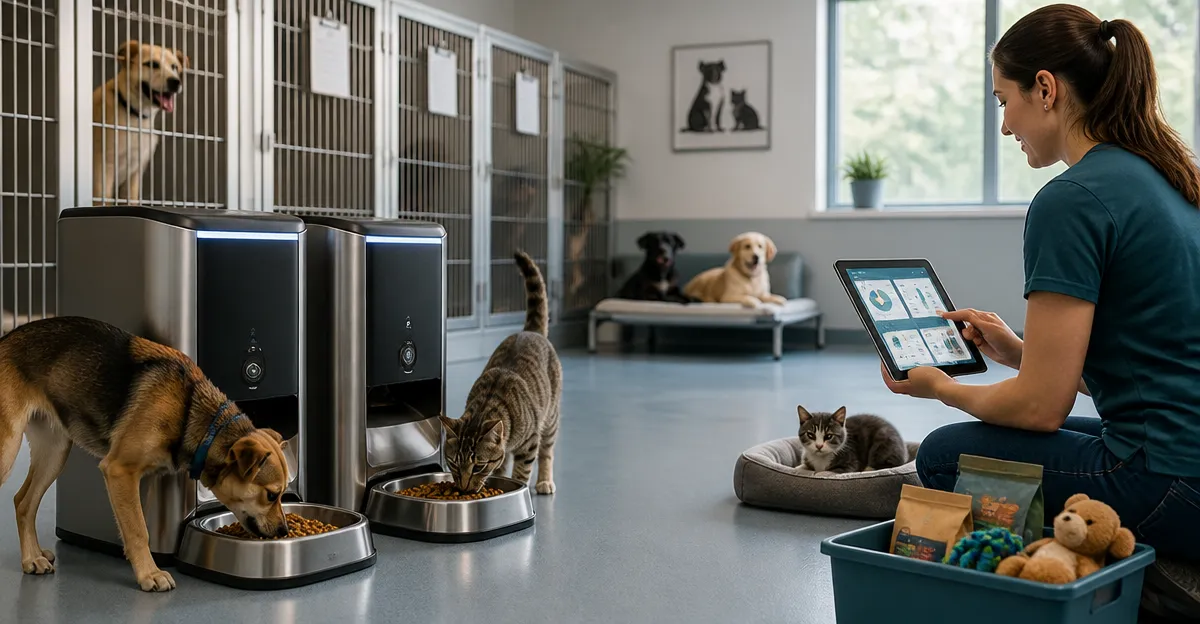
Introduction
This guide explains how animal shelters and rescue organizations can adopt automated feeding solutions to improve animal welfare, reduce labor costs, and ensure consistent nutrition. Readers will learn the underlying technology, key selection criteria, funding options, and practical tips for successful deployment. The article also highlights five vetted smart feeders that have proven performance in real‑world settings. By the end of the guide, decision‑makers will be equipped to choose a system that matches their operational constraints and budget.
Background & Context
Many shelters operate with limited staff and fluctuating volunteer schedules. Manual feeding can lead to missed meals, over‑feeding, or food waste, especially during high‑admission periods. Automated feeders address these challenges by delivering precise portions at programmed times, while many models integrate cloud‑based monitoring to alert staff of low food levels or mechanical issues. The technology typically relies on Wi‑Fi or Bluetooth connectivity, a programmable timer, and a sealed food reservoir to preserve freshness.
When selecting a feeder, shelters must consider durability, ease of cleaning, power reliability, and the ability to handle multiple animals. Additionally, data security and privacy are important because some devices communicate with external servers. Understanding these factors helps organizations avoid costly replacements and ensures that the feeder aligns with animal‑care protocols.
Key Concepts and Strategies for Automated Feeding
Automated feeding can be categorized into three primary strategies: scheduled portioning, demand‑based dispensing, and selective access. Scheduled portioning releases a fixed amount of food at predetermined times, which is ideal for groups with regular feeding schedules. Demand‑based dispensers allow animals to eat when hungry, but they require mechanisms to prevent food theft. Selective access feeders use microchip or RFID identification to ensure that only the intended animal receives its meal, protecting diet‑specific requirements.
Each strategy influences the type of feeder that best serves a shelter. For example, a high‑turnover dog shelter may benefit from a simple timer‑based feeder, whereas a multi‑cat rescue with prescription diets should consider a microchip‑enabled unit.
Recommended Products by Strategy
- Petlibro Automatic Cat Feeder – excels in scheduled portioning with Wi‑Fi control and up to ten meals per day.
- Amazon Basics Pet Feeder & Water Dispenser – a gravity‑based system ideal for continuous access without electronic components.
- oneisall Automatic Cat Feeder – offers a dial‑set program and dual‑bowl design for two cats, supporting demand‑based feeding.
- Voluas Automatic Cat Feeder – combines LCD programming with battery backup, suitable for shelters with intermittent power.
- SureFeed Microchip Pet Feeder – provides selective access using microchip or RFID tags, perfect for multi‑pet households with prescription diets.
Comparison & Selection Guide
| Feature | Petlibro Automatic Cat Feeder | Amazon Basics Feeder & Water Dispenser | oneisall Automatic Cat Feeder | Voluas Automatic Cat Feeder | SureFeed Microchip Feeder |
|---|---|---|---|---|---|
| Price (USD) | $79.99 | $26.99 | $49.99 | $43.99 | $199.00 |
| Rating | 3.8/5 (7,240 reviews) | 4.5/5 (28,343 reviews) | 4.6/5 (4,284 reviews) | 4.4/5 (12,451 reviews) | 4.2/5 (13,264 reviews) |
| Connectivity | 5 GHz/2.4 GHz Wi‑Fi (requires server connection) | None (gravity) | None (dial‑programmed) | Wi‑Fi optional; USB or 3 D‑cell batteries | Microchip/RFID, no Wi‑Fi required |
| Portion Control | Up to 48 portions per meal (1/12 cup each) | Manual fill, no portioning | 1 portion ≈ 10 g (up to 6 meals/day) | 0‑40 portions (≈ 6‑7 g each) | Fixed bowl size; relies on separate bowls for portioning |
| Power Source | Battery backup + mains | None (gravity) | Battery backup + mains | USB adapter or 3 D‑cell batteries | Mains (adapter) with optional battery backup |
| Special Features | Voice messages, freshness preservation, low‑food sensor | Large transparent hoppers, anti‑skid base | Dual‑bowl layout for two cats, voice recorder | LCD screen, lockable lid, battery backup | Microchip/RFID selective access, three‑year warranty |
When evaluating these options, shelters should rank the criteria that matter most to their operation. For example, a shelter with unreliable internet may avoid Wi‑Fi‑dependent models, while a facility that must separate diets should prioritize selective access feeders.
Funding Strategies for Shelters
Implementing automated feeders requires upfront capital, but several funding avenues can offset costs. Grants from animal‑welfare foundations often cover technology upgrades that improve care standards. Crowdfunding campaigns that highlight specific needs—such as “Automated Feeding for 30 Rescue Cats”—can attract donor enthusiasm. Additionally, many manufacturers offer nonprofit discounts or bulk‑purchase programs; contacting the seller directly may yield a reduced unit price.
Another approach is to allocate a portion of the shelter’s adoption fee revenue to a “Feeder Fund.” Transparent accounting encourages supporters to see the direct impact of their contributions. Finally, corporate sponsorships from pet‑food brands can provide both equipment and ongoing food supplies, creating a mutually beneficial partnership.
Best Practices & Tips for Successful Deployment
- Perform a pilot test. Install a single unit in a low‑traffic area for two weeks to verify reliability before scaling.
- Secure power redundancy. Choose feeders with battery backup (e.g., Voluas, oneisall) to prevent interruptions during outages.
- Maintain hygiene. Clean stainless‑steel bowls daily and replace desiccant packets in sealed reservoirs monthly.
- Document feeding schedules. Keep a printed log beside each feeder to cross‑reference with app data, ensuring accountability.
- Train animals gradually. Use the feeder’s voice‑recording feature (Petlibro, oneisall, Voluas) to associate the sound with meals, reducing stress.
- Monitor network security. For Wi‑Fi models, create a dedicated guest network to isolate the feeder from the shelter’s main data network.
- Rotate food storage. Store dry kibble in airtight containers and refill the feeder’s tank no more than two weeks at a time to preserve freshness.
Frequently Asked Questions
1. Do Wi‑Fi feeders work without an internet connection?
Most Wi‑Fi models, such as the Petlibro Automatic Cat Feeder, still require connection to the manufacturer’s cloud server; loss of internet can render the app unusable, though the device may continue dispensing food.
2. Can I use a feeder for both cats and small dogs?
Yes. Units with adjustable portion sizes (Voluas, oneisall) accommodate the dietary needs of small dogs and cats alike, provided the kibble size is compatible.
3. How do I prevent larger animals from stealing food?
Selective‑access feeders like the SureFeed Microchip Pet Feeder open only for the registered animal, eliminating food theft among mixed‑species households.
4. What maintenance schedule is recommended?
Clean the food bowl and hopper weekly, replace the desiccant packet every 30 days, and inspect the motor mechanism monthly for wear.
5. Are there any legal considerations for data privacy?
When a feeder transmits data to external servers, shelters should review the provider’s privacy policy and ensure that no personally identifiable information (e.g., staff Wi‑Fi passwords) is stored.
6. How many feeders can I manage with a single app?
Petlibro’s app supports multiple devices under one account, allowing centralized monitoring of several shelters or separate rooms.
7. Is battery backup sufficient for continuous operation?
Battery backup typically provides 24‑48 hours of operation; shelters should keep spare batteries on hand and schedule regular charging.
Conclusion
Automated pet feeders empower shelters to deliver consistent nutrition, reduce labor strain, and improve overall animal welfare. By understanding the technology, aligning product features with operational needs, and leveraging targeted funding sources, organizations can implement reliable feeding solutions that scale with their mission. The products highlighted in this guide represent a spectrum of price points and capabilities, ensuring that every shelter can find a suitable option.
Products Featured in This Guide
Petlibro Automatic Cat Feeder
Price: $79.99 | Rating: 3.8/5 (7,240 reviews)
Featured for its Wi‑Fi scheduling, voice‑call customization, and freshness‑preserving tank, making it suitable for shelters that require precise portion control and remote monitoring.
Amazon Basics Pet Feeder & Water Dispenser
Price: $26.99 | Rating: 4.5/5 (28,343 reviews)
Featured for its low cost, gravity‑based continuous feeding, and large capacity, ideal for shelters that need a simple, maintenance‑free solution.
oneisall Automatic Cat Feeder
Price: $49.99 | Rating: 4.6/5 (4,284 reviews)
Featured for its dual‑bowl layout, dial‑programming simplicity, and voice‑recorder, providing an affordable option for shelters caring for multiple cats.
Voluas Automatic Cat Feeder
Price: $43.99 | Rating: 4.4/5 (12,451 reviews)
Featured for its LCD interface, battery backup, and compact design, offering reliability for shelters with intermittent power supplies.
SureFeed Microchip Pet Feeder
Price: $199.00 | Rating: 4.2/5 (13,264 reviews)
Featured for its microchip/RFID selective access, preventing food stealing in multi‑pet environments and supporting prescription diets.