Introduction
This guide explains how a cat owner can move a selective eater to an automatic feeder without causing anxiety. It outlines practical actions, explains why each action matters, and integrates reliable tools that simplify the process. Readers will learn how to assess feeding habits, select the appropriate device, program meals, and maintain a healthy routine. The result is a calm cat, consistent nutrition, and peace of mind for the owner.
What You’ll Need
- ANDOLL HOME Automatic Cat Feeder – $29.99, 4.4/5 rating, 4 L capacity, voice recorder, battery backup.
- Voluas Automatic Cat Feeder – $37.39, 4.4/5 rating, 4 L capacity, up to 40 portion settings.
- oneisall Cat Feeder for 2 Cats – $42.49, 4.6/5 rating, dual bowls, 5 L capacity.
- Yuposl Automatic Cat Feeder – $30.59, 4.4/5 rating, 3 L capacity, 180‑day battery life.
- IMIPAW Automatic Cat Feeder – $25.19, 4.4/5 rating, 3 L capacity, precise portion control.
Step 1: Assess Current Feeding Habits
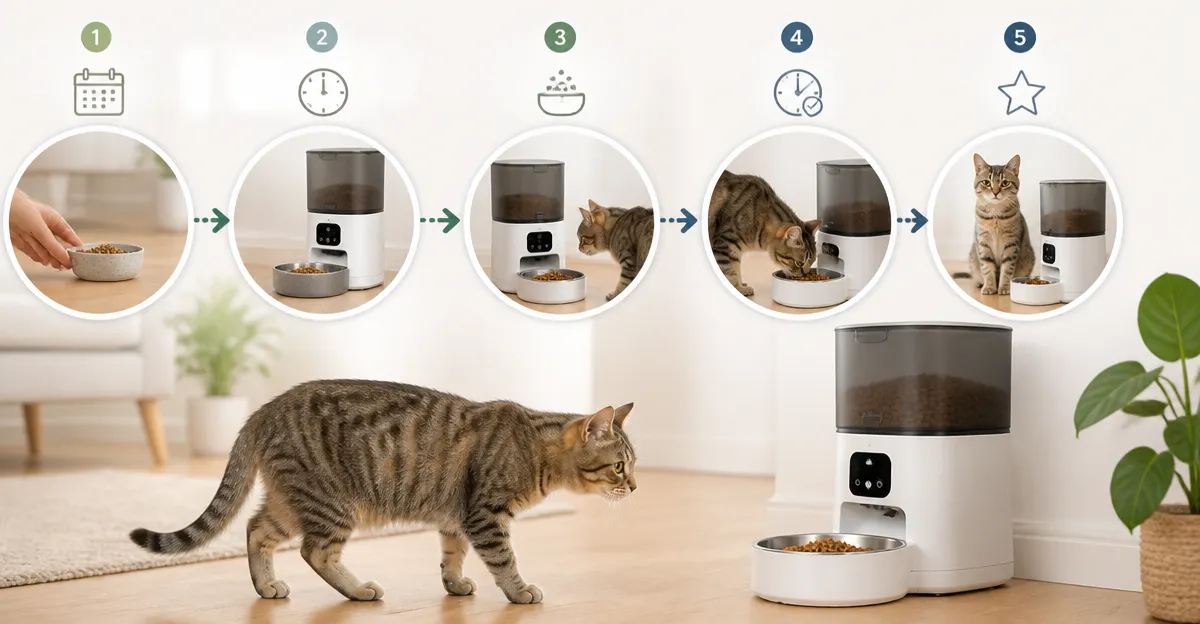
Before any equipment is introduced, the owner should record the cat’s typical eating times, portion sizes, and food preferences for three consecutive days. This data provides a baseline that informs the programming of the feeder and prevents under‑ or over‑feeding. Use a simple notebook or a digital note‑taking app; the method does not affect the outcome. Understanding the cat’s routine also reveals any anxiety triggers that may need to be addressed during the transition.
Step 2: Choose the Appropriate Feeder Capacity
The next decision concerns storage volume. A cat that eats multiple small meals benefits from a larger reservoir, whereas a cat with fewer meals can use a more compact unit. The ANDOLL HOME Automatic Cat Feeder offers 4 L of dry food, sufficient for up to eight meals per day for an average adult cat. For households with two cats, the oneisall Cat Feeder for 2 Cats provides dual bowls and a 5 L capacity, preventing food competition. Selecting a feeder that matches the cat’s schedule reduces the need for frequent refills and minimizes stress.
Step 3: Set Up the Feeder and Program Meals
Unbox the chosen device and place it on a stable, level surface away from direct sunlight. Follow the manufacturer’s instructions to insert batteries or connect the AC adapter; most models include a dual‑power option for reliability. Using the LCD interface, program the exact number of meals, portion size, and feeding times that correspond to the baseline data collected in Step 1. For example, the Voluas Automatic Cat Feeder allows up to 40 portion settings, giving precise control over a 6‑gram serving. Record a brief voice greeting using the built‑in 10‑second recorder; the familiar tone reassures the cat that the feeding event is intentional.
Step 4: Introduce the Feeder Gradually
Begin by placing the feeder beside the cat’s regular bowl and allowing the animal to investigate the device while it remains empty. After a short observation period, load a small amount of food and trigger a single manual dispense. Praise the cat calmly when it eats from the new bowl, reinforcing positive association. Over the next two days, increase the number of automated meals while decreasing the amount of food offered in the traditional bowl. This gradual shift prevents the cat from perceiving the feeder as a threat.
Step 5: Monitor Feeding Behavior and Adjust Portions
During the first week, observe the cat’s reaction to each scheduled meal. If the cat finishes the portion quickly, consider reducing the portion size by one increment; if leftovers remain, increase the portion slightly. The IMIPAW Automatic Cat Feeder provides up to 20 serving options per meal, allowing fine‑tuned adjustments without reprogramming the entire schedule. Record any changes in weight, activity level, or stool consistency, as these are indicators of nutritional adequacy.
Step 6: Maintain Hygiene and Food Freshness
All recommended feeders feature removable bowls and food containers that can be washed with warm, soapy water. The Yuposl Automatic Cat Feeder includes a desiccant pack and a silicone sealing rotor that keep kibble dry for up to two weeks. Clean the feeder weekly, paying special attention to the dispensing mechanism to prevent clogs. Regular maintenance extends the lifespan of the device and ensures that the cat receives nutritionally intact meals.
Step 7: Troubleshoot Common Issues
- Food Jammed in Dispenser: Turn off the unit, remove the food container, and gently tap the sides to release stuck kibble. The double‑rubber rotor design in the Yuposl Automatic Cat Feeder minimizes this problem, but occasional blockage can occur with oversized pieces.
- Cat Refuses to Eat: Verify that the portion size matches the cat’s preference and that the bowl is clean. Some cats are sensitive to plastic odors; using the stainless‑steel bowl included with the oneisall Cat Feeder for 2 Cats can alleviate this issue.
- Power Failure: Ensure that the battery backup is installed correctly. Both the ANDOLL HOME Automatic Cat Feeder and the IMIPAW Automatic Cat Feeder support dual power sources, allowing continuous operation during outages.
Tips & Pro Tips
- Place the feeder on a non‑slip mat to prevent accidental movement.
- Use the voice recorder consistently; a familiar phrase each day reinforces routine.
- Rotate the food container weekly to avoid moisture accumulation.
- For multi‑cat households, consider the dual‑bowl design of the oneisall Cat Feeder for 2 Cats to reduce competition.
- Keep a spare set of batteries on hand, especially if the feeder relies heavily on battery power during travel.
Conclusion
Transitioning a picky cat to an automatic feeder is achievable when the owner follows a structured plan, monitors the animal’s response, and selects a device that aligns with the cat’s dietary needs. By assessing current habits, choosing the right capacity, programming precise meals, and maintaining cleanliness, the owner creates a stress‑free feeding environment. The recommended feeders provide reliable performance, voice interaction, and power flexibility, ensuring that the cat receives consistent nutrition even when the owner is absent.
Products Mentioned in This Guide
Frequently Asked Questions
How can I introduce an automatic feeder to a picky cat without causing anxiety?
Start by placing the feeder next to the cat’s usual bowl, use the voice recorder to play familiar sounds, and gradually replace manual meals with small portions from the feeder.
What features should I look for when choosing an automatic feeder for a selective eater?
Prioritize adjustable portion sizes, a quiet dispensing mechanism, voice recording, and battery backup to ensure consistent feeding without stress.
How do I program the feeder to match my cat’s current feeding schedule?
Set the feeder’s timer to the same times you normally feed, begin with the same portion size, and slowly adjust as the cat gets comfortable with the device.
Can I use multiple feeders for a household with more than one cat?
Yes, models like the oneisall Cat Feeder offer dual bowls and separate programming, allowing each cat to receive its own schedule and portion.
What is the best way to keep an automatic feeder clean and hygienic?
Empty any leftover food daily, wash the food tray and bowl with warm soapy water weekly, and wipe the exterior to prevent buildup and odors.