How to Integrate Your Smart Pet Feeder with Alexa and Google Home: Step‑by‑Step Voice Control Setup and Troubleshooting
Introduction
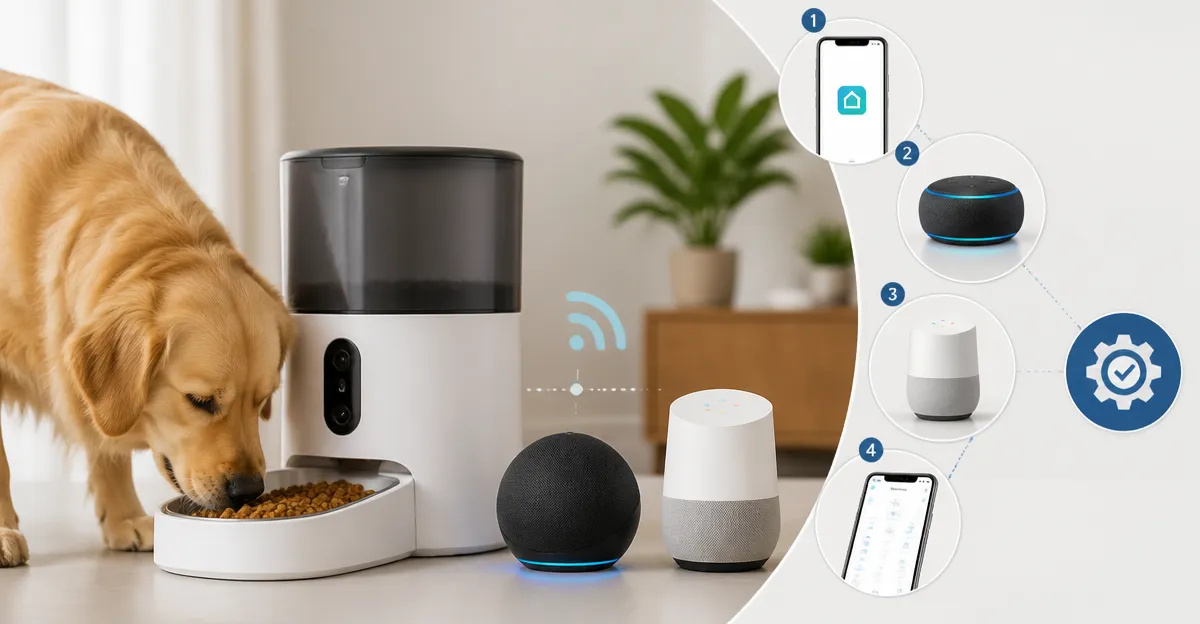
In today’s connected homes, a smart pet feeder can become an extension of a voice‑activated ecosystem. This guide explains how to link a Wi‑Fi enabled feeder to both Amazon Alexa and Google Home, enabling hands‑free feeding, real‑time notifications, and remote monitoring. Readers will learn the required hardware, configuration steps, and common pitfalls, ensuring that their feline companions receive meals on schedule even when the owner is away. By the end of the article, the reader will be able to issue commands such as "Alexa, feed Bella" or "Hey Google, give Whiskers his dinner" with confidence.
What You’ll Need
- A Wi‑Fi network operating on 2.4 GHz or 5 GHz (both bands are supported by the feeders listed below).
- Smartphone or tablet with iOS 13+ or Android 8+ for installing the manufacturer app.
- Amazon Alexa‑compatible device (Echo, Echo Dot, or Echo Show) and a Google Nest speaker or display.
- One of the recommended smart feeders (first mention linked):
- Optional: USB power bank for uninterrupted power during outages.
Step‑by‑Step Instructions
1. Prepare a Stable Wi‑Fi Environment
A reliable network connection is the foundation of any voice‑controlled device. Ensure that the router broadcasts both 2.4 GHz and 5 GHz bands; the feeders listed support dual‑band operation, which reduces interference from neighboring networks. Position the feeder within 10‑15 feet of the router to avoid signal degradation, especially if the unit will be placed on a high shelf. Verify connectivity by checking that the feeder’s indicator light turns solid green after power‑on.
2. Install the Manufacturer App and Register the Feeder
Download the appropriate app from the App Store or Google Play. For the PETLIBRO 5L WiFi Cat Feeder, the PETLIBRO app guides the user through Wi‑Fi pairing, portion calibration, and voice‑message recording. The app also provides low‑food alerts and jam detection, features that are essential for reliable automation. During registration, create a unique device name (e.g., "LivingRoomFeeder") that will be referenced later in voice commands.
Why this product is useful: Its dual‑band Wi‑Fi and robust mobile app make it straightforward to integrate with third‑party voice assistants. The device costs $79.99, holds a 5‑liter tank, and carries a 4.1‑star rating from 9,999 reviewers, indicating strong overall satisfaction.
3. Enable the Alexa Skill
- Open the Alexa app on your smartphone.
- Tap More > Skills & Games and search for "PETLIBRO".
- Select the official PETLIBRO skill and press Enable to Use.
- Sign in with the same credentials used in the PETLIBRO mobile app; this links the feeder account to Alexa.
- After successful linking, Alexa will discover the device automatically. If it does not appear, use the Discover Devices command.
Once linked, you can issue commands such as "Alexa, ask PETLIBRO to feed Bella now" or "Alexa, set Bella’s next meal for 7 PM". The skill also supports querying the food level, allowing statements like "Alexa, how much food is left in the feeder?".
4. Enable the Google Home Action
- Launch the Google Home app and tap the + Add button.
- Select Set up device > Works with Google.
- Search for "PETLIBRO" and choose the official action.
- Enter the PETLIBRO account credentials to authorize the connection.
- After linking, the feeder appears under the "Works with Google" section. Assign it to a room for easier voice targeting.
Google Assistant now understands commands like "Hey Google, feed the cat" or "Hey Google, what is the food level?". The action respects the same schedule set in the app, ensuring consistent feeding across platforms.
5. Create Custom Voice Routines for Convenience
Both Alexa and Google Home allow the creation of routines that combine multiple actions. For example, a morning routine could turn on a smart lamp, announce the feeding, and then trigger the feeder. In the Alexa app, navigate to More > Routines > Create Routine, set a trigger (time‑of‑day or voice phrase), add the action "Feed [Device Name]", and optionally add a spoken confirmation. In Google Home, use the Routines section to add a new routine with the action "Call PETLIBRO to feed". These routines reduce the number of separate voice commands required throughout the day.
6. Verify and Test the Integration
After configuration, perform a manual test. Issue a command such as "Alexa, feed Bella now" and observe the feeder dispensing food. Confirm that the app registers the feeding event and that the low‑food indicator updates appropriately. Repeat the test with Google Assistant to ensure both ecosystems operate independently. If the feeder does not respond, revisit the Wi‑Fi settings and re‑link the skill or action.
Why an alternative product may be preferred: The PETLIBRO Cat Feeder with Camera adds a 1080P HD camera and two‑way audio, allowing owners to see their pet while feeding. Priced at $139.99 with a 4.2‑star rating, it provides visual confirmation that the pet has eaten, which can be reassuring for owners who travel frequently.
7. Optimize Power Management for Uninterrupted Feeding
All recommended feeders include battery backup options. The ANDOLL HOME 4L Automatic Cat Feeder offers both a 5 V DC adapter and three alkaline batteries, ensuring operation during power outages. At $30.99 and a 4.5‑star rating, it is a budget‑friendly solution for households with unreliable electricity. For extended outages, connect a USB power bank to the feeder’s USB port; this maintains Wi‑Fi connectivity while the internal batteries supply the motor.
Why this matters: Alexa and Google Home rely on an active internet connection to send commands. A loss of power without backup can cause missed meals and false low‑food alerts. By planning for redundancy, owners protect both their pet’s schedule and their peace of mind.
Tips & Pro Tips
- Label the Device Name Clearly: Use a name that does not conflict with other smart devices (e.g., "FeederLivingRoom" instead of just "Feeder").
- Calibrate Portion Size: Use the app’s portion‑testing feature before relying on automatic schedules; small kibble may require adjustments.
- Utilize Voice Messages: Record a brief 10‑second greeting in the feeder’s built‑in speaker; this reinforces routine and reduces anxiety for the pet.
- Secure the Feeder Physically: For multi‑cat households, attach the feeder to a wall or use child‑safety latches to prevent tipping, especially when using the oneisall 5L WiFi Cat Feeder.
- Monitor Network Health: Place the router on a higher shelf and enable QoS for smart home devices to prioritize feeder traffic.
Troubleshooting
| Problem | Possible Cause | Solution |
|---|---|---|
| Feeder does not respond to voice command | Wi‑Fi disconnected or skill not linked | Check router status, re‑run device discovery in Alexa/Google Home, and ensure the PETLIBRO account is linked. |
| Portion jammed | Food clump or oversized kibble | Turn off power, remove the bowl, and gently clear the rotor. Use the desiccant packet to keep kibble dry. |
| Low‑food alert not triggering | Sensor blocked or desiccant missing | Inspect the infrared sensor at the outlet; replace the desiccant bag if it is exhausted. |
| Voice message is too quiet | Speaker volume set low | Increase volume via the app settings; test by playing a short recording. |
| Google Assistant says "I didn't understand" | Device name mismatch | Rename the feeder in the Google Home app to a simple, unique name and retry. |
Conclusion
Integrating a smart pet feeder with Alexa and Google Home transforms routine feeding into a seamless, voice‑controlled experience. By following the steps outlined—preparing a stable network, installing the manufacturer app, linking the appropriate skills, and creating custom routines—owners can ensure their cats receive timely meals while maintaining full visibility through camera‑enabled models. The troubleshooting section equips readers to resolve common issues quickly, and the pro tips provide additional safeguards for long‑term reliability. With the right tools, a busy household can enjoy peace of mind, knowing that technology will care for its furry members even when the owner is away.
Products Mentioned in This Guide
Frequently Asked Questions
What Wi‑Fi specifications are required to connect a smart pet feeder to Alexa or Google Home?
The feeder must be on a 2.4 GHz or 5 GHz Wi‑Fi network that supports standard WPA2 security.
Do I need the manufacturer’s app to link the feeder with Alexa and Google Home?
Yes, you must first set up the feeder in its native app before enabling the Alexa or Google Home skill.
How do I enable voice commands like “Alexa, feed Bella” after setup?
Enable the feeder’s skill in the Alexa app (or Google Home app), then discover devices; the feeder appears as a controllable entity for voice commands.
What common issues prevent the feeder from responding to voice commands?
Typical problems include Wi‑Fi connectivity loss, the skill not being linked, or the feeder being offline in the manufacturer’s app.
Can I receive feeding notifications on my phone or smart speaker?
Yes, once linked, both Alexa and Google Home can push real‑time alerts for feeding times and low‑food warnings.