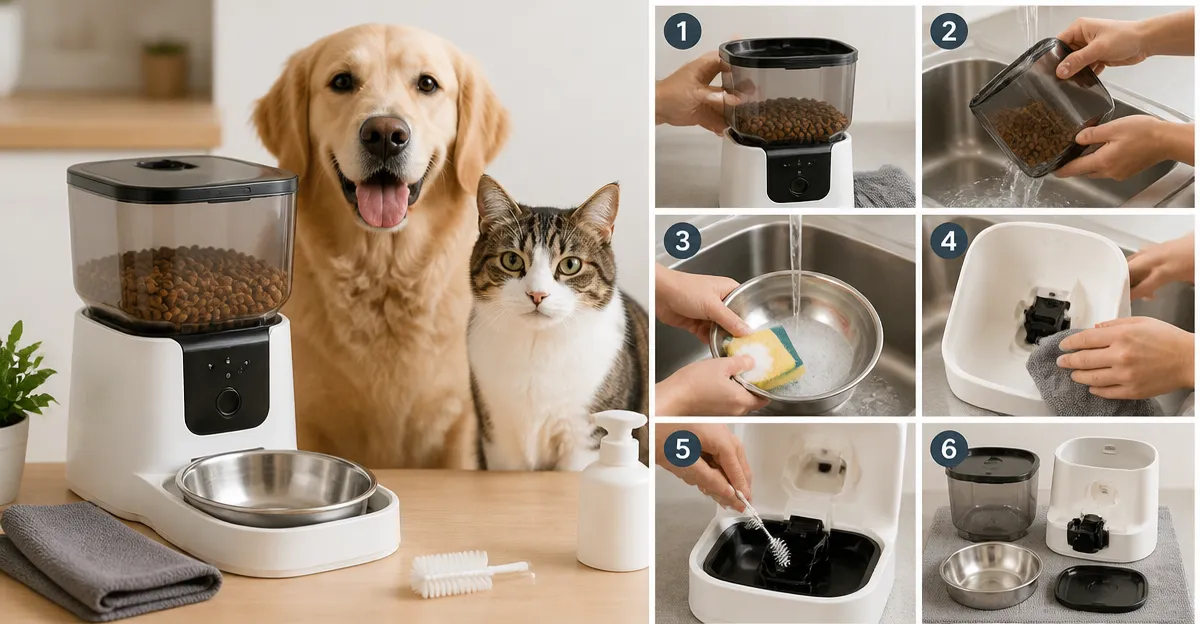
How to Clean and Maintain Your Pet Feeder: Essential Cleaning & Maintenance Tips for Safe, Long-Lasting Use
One will learn how to keep a pet feeder hygienic, functional, and durable. Maintaining a feeder prevents bacterial growth, mechanical failures, and unpleasant odors. This guide provides a systematic approach that applies to automatic, gravity, and combined food‑water units. By following each step, one ensures the health of the pet and the reliability of the equipment.
What You Will Need
- Mild dish soap
- Soft sponge or non‑abrasive brush
- Microfiber cloth
- White vinegar or food‑grade sanitizer
- Dry paper towels
- Optional: Replacement silicone seals for airtight models
Step 1: Unplug and Disassemble the Feeder
One should always disconnect the power source before beginning any cleaning procedure. For battery‑operated units, remove the batteries to avoid accidental activation. Next, detach the food hopper, water reservoir, and any detachable trays. This separation allows thorough access to all surfaces and reduces the risk of water entering electronic components.
Step 2: Remove Residual Food and Water
Empty the hopper and water reservoir into a trash bin or a secondary container. For automatic models such as the PETLIBRO Automatic Cat Feeder, the airtight storage compartment can be lifted without tools, making removal quick. The feeder stores up to 3 L of kibble, and its twist‑lock lid prevents spillage during cleaning. The product is priced at $59.99 and holds a rating of 4.4 out of 5 from 8,851 reviews, indicating reliable performance.
Step 3: Clean the Food Hopper and Tray
Fill a basin with warm water and add a few drops of mild dish soap. Submerge the hopper and tray, then use a soft sponge to scrub the interior. Avoid abrasive pads, as they may scratch the plastic and harbor bacteria. Rinse thoroughly with clean water and dry with a microfiber cloth. The Amazon Basics Gravity Pet Feeder features a transparent hopper that is easy to inspect for residue. Priced at $15.96 with a rating of 4.3 out of 5 from 10,790 reviews, it exemplifies a straightforward cleaning experience.
Step 4: Clean the Dispensing Mechanism
Inspect the rotating rotor or dispensing chute for clogs. Use a thin brush or a cotton swab dipped in a vinegar solution to dissolve any dried kibble. The IMIPAW Automatic Cat Feeder incorporates an anti‑clogging design and an LCD screen that indicates when a blockage occurs. It stores 3 L of food, includes a desiccant bag to maintain freshness, and is priced at $30.99 with a rating of 4.4 out of 5 from 5,175 reviews. This model’s removable tray simplifies deep cleaning of the dispensing area.
Step 5: Clean the Water Reservoir
Rinse the water reservoir with warm, soapy water. For units that use a check valve, such as the ZOMISIA Cat Feeder and Water Dispenser, remove the filtering plate and clean both components separately. The set holds 0.8 gallon of water, enough for several days, and its non‑toxic material ensures safe hydration. The product costs $29.99 and enjoys a rating of 4.5 out of 5 from 1,450 reviews. After cleaning, allow the reservoir to air dry completely before reassembly.
Step 6: Sanitize All Components
Prepare a solution of one part white vinegar to three parts water. Submerge all removable parts for five minutes to eliminate lingering microbes. Rinse thoroughly and dry with paper towels. For feeders that incorporate silicone seals, inspect the seals for wear and replace them if necessary. Proper sanitation extends the lifespan of the feeder and protects the pet from gastrointestinal issues.
Step 7: Reassemble and Test the Feeder
Once all components are dry, reattach the hopper, tray, and water reservoir. Reinstall batteries or reconnect the power adapter. Program a test feeding using the device’s interface to verify that the dispenser operates smoothly. The Amazon Basics Pet Feeder and Water Dispenser combines a gravity food hopper with a water dispenser, allowing simultaneous verification of both systems. Priced at $26.99 with a rating of 4.5 out of 5 from 28,270 reviews, it provides a convenient all‑in‑one solution for routine testing.
Tips & Pro Tips
- Schedule a deep cleaning every two weeks for high‑traffic feeders and monthly cleaning for occasional use.
- Use a dry paper towel to remove moisture from electronic compartments before reconnecting power.
- Store desiccant bags in a sealed container when not in use to preserve their effectiveness.
- For outdoor feeders, place a weighted cover to prevent wind‑driven debris from entering the hopper.
- Document feeding schedules and cleaning dates in a notebook to maintain consistency.
Troubleshooting
Problem: Feeder does not dispense food after cleaning.
Solution: Verify that the rotor is correctly aligned and that no residual soap remains in the dispensing chute. Reset the device by removing and reinserting the batteries.
Problem: Water leaks from the reservoir.
Solution: Ensure the check valve is seated properly and that the sealing gasket is intact. Replace the gasket if it appears cracked.
Conclusion
By following the outlined steps, one can maintain a pet feeder that remains hygienic, reliable, and safe for daily use. Regular cleaning prevents bacterial growth, mechanical failures, and unpleasant odors, thereby extending the equipment’s service life. Implementing the recommended tools and best practices ensures both pet health and owner peace of mind.
Products Mentioned in This Guide
Frequently Asked Questions
How often should I clean my pet feeder?
Clean the feeder weekly for dry food and daily for wet food or water reservoirs to prevent bacterial growth.
Can I use regular dish soap to clean a pet feeder?
Yes, a mild dish soap with a soft sponge is safe for most plastic feeders and won’t leave harmful residues.
What is the best way to sanitize a feeder without damaging electronics?
Wipe surfaces with a diluted white vinegar solution or food‑grade sanitizer, then dry thoroughly before reassembling.
Do I need to replace silicone seals on airtight feeders?
Replace seals if they are cracked, warped, or no longer create a tight seal to maintain freshness and prevent leaks.
How do I prevent odors from building up in my pet feeder?
Rinse and dry all parts after each cleaning, store the feeder in a cool dry place, and regularly clean the water reservoir with vinegar.